Parker Foster · 2 September 2026
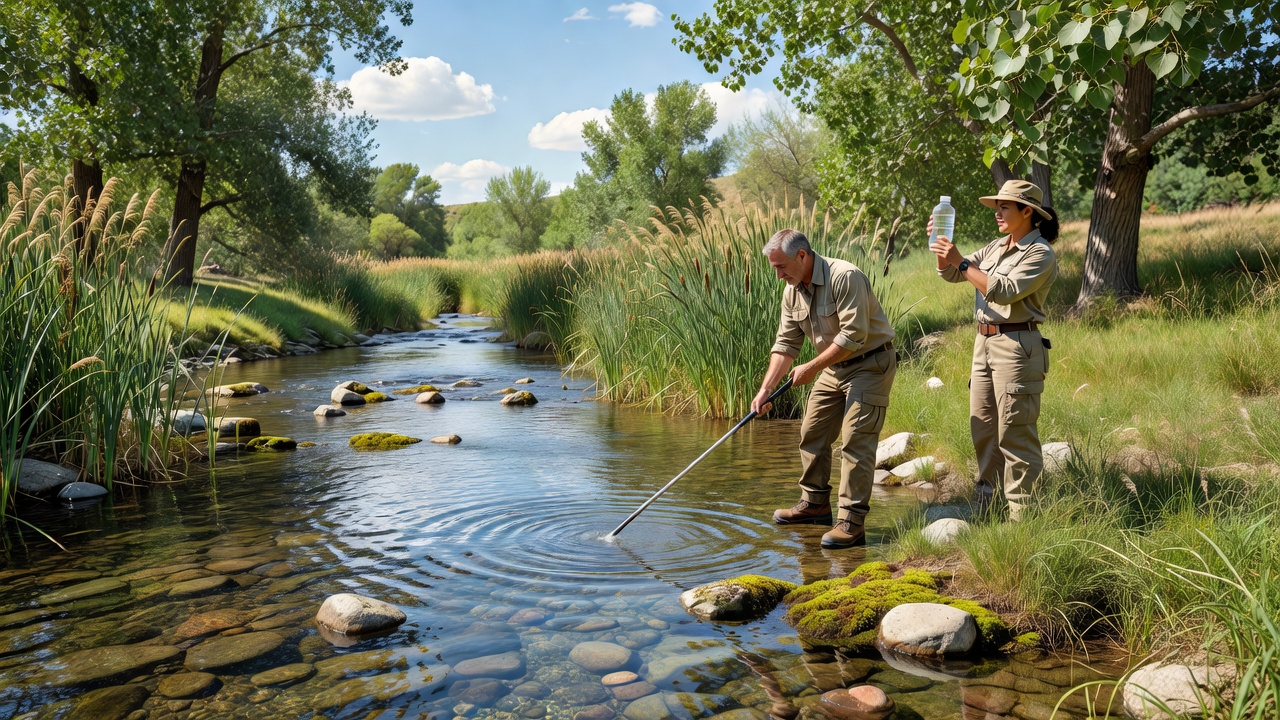
Recent data from Sand Creek monitoring stations indicate generally stable water quality across key parameters. Three stations located along the creek collected samples over the past quarter, measuring pH levels, dissolved oxygen, nitrate concentrations, and turbidity. Officials noted that most readings fell within acceptable ranges for supporting local aquatic life.
Station Data Highlights
At the upstream station near the city limits, pH averaged 7.1 with dissolved oxygen at 8.4 milligrams per liter. Nitrate levels remained below 2 milligrams per liter, and turbidity measured 4.2 nephelometric turbidity units. The midstream station closer to residential areas recorded a pH of 7.3, dissolved oxygen of 7.9 milligrams per liter, nitrates at 2.8 milligrams per liter, and turbidity at 5.1 units. Downstream near the industrial zone, pH reached 7.0, dissolved oxygen 7.6 milligrams per liter, nitrates 3.1 milligrams per liter, and turbidity 6.3 units. Seasonal variations appeared minor, with slight increases in nitrates following recent rainfall events. No exceedances of state environmental thresholds occurred during the monitoring period.
Local Implications and Next Steps
These findings suggest the creek continues to support fish populations and recreational uses without immediate concerns. Local wildlife observers reported consistent sightings of macroinvertebrates, indicating healthy habitat conditions. Residents are advised to avoid direct contact after heavy rains due to temporary turbidity spikes. The monitoring program will continue with monthly sampling and expanded testing for additional contaminants such as phosphates and heavy metals. Community members can access full datasets through the county environmental portal. Ongoing efforts focus on reducing runoff from nearby agricultural and urban sources to maintain these stable trends into the coming seasons.